
La Maison du Caviar – Caviar Baeri Français

La Maison du Caviar – Caviar Baeri Français
68.00 €
Icon-Icon Opinion :
The house recommended by the biggest Michelin-starred chefs, offers here one of the newest caviars. Those eggs are particularly big and a bit less salty!
Name of the product : Caviar Baeri Français
Brand : La Maison du Caviar
Description :The Siberian sturgeon or Acipenser Baeri, is the most widespread species in European farms. Its eggs, of average size between 2.5 and 3 mm, are easily detached. The tone of Baeri caviar remains brown with a delicate and melting texture. Our French farms raise the sturgeon Acipenser Baeri in the best conditions.
Related products
-

Byblos
39.90 € En savoir +BuyAuthor: Collective
Publishing House: Cercle d’Art
Publication Date: August 2017
The history of the palace of Saint-Tropez, through several hundreds of archival photographs. A place of artistic, musical and gastronomic expression, the place welcomed celebrities for many years.
-

Hotel Petra
48.00 € En savoir +BuyAuthor: Robert Polidori
Publishing House: Steidl Interart
Publication Date: September 2016
This book is Robert Polidori’s portrait of the interiors of the now demolished Hotel Petra in Beirut, a grand icon of the city’s prewar history. The Hotel Petra was once one of the most popular hotels in Beirut, conveniently located in the city center adjacent to the Grand Theatre. After the Lebanese Civil War of 1975-90, Rafiq al-Hariri founded a holding company, Solidere, whose goal was the selective demolition and reconstruction of downtown Beirut’s urban fabric. In 1992 the Hotel Petra was set aside for later restoration, and from that moment essentially cut off from any human intervention.
-
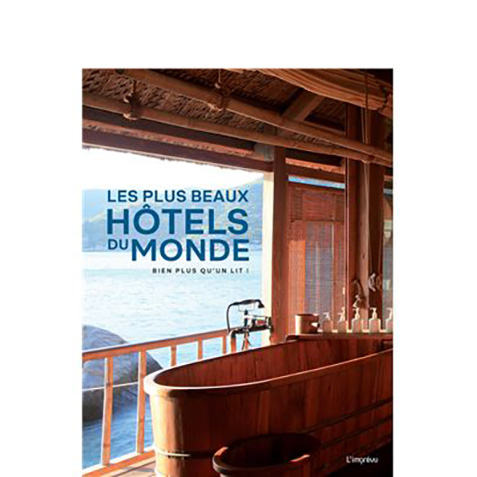
Les plus beaux hôtels du monde. Bien plus qu’un lit !
29.95 € En savoir +BuyAuthor: Diane Routex
Publishing House: L’imprévu-Adulte
Publication Date: November 2019
Palace, capsule hotel, boutique-haste luxury hotel. design hotel at green hotel… today. The concept of a hotel contains an extremely dense and diverse reality. The hotel is a very codified place meeting official standards, which often gives it an impersonal and banal character. But when he transgresses the codes-in terms of design, architecture or intimacy he acquires a very special personality. In order to stand out from the ever increasing number of offers, the hotel establishments compete for originality and personality. Atypical layout, infinite luxury, architectural challenge. spectacular surroundings, eco-tourism labels or trendy terraces are the elements that determine the success of an establishment. Today’s hotels can take any shape and make the craziest architectural shores real.
The most beautiful hotels in the world take you around the world to some of the most innovative and daring establishments in terms of aesthetics and design and present you with sixty-five of these hotels that offer more than a bed for a simple night’s sleep!
-

Hôtel Splendid de Dax
35.00 € En savoir +BuyIcon Icon Opinion
During this visual trip that takes readers through the renovation of this Art Deco treasure, we are granted a rare access behind the scenes of this hotel’s renaissance.
Authors: Marianne Le Morvan, Pierre Dupin
Publishing House: Cairn
Publication Date: October 2020
An art book to discover the restoration secrets of the Splendid Hotel de Dax, a true architectural jewel of the Art Deco period. Through a subtle and graphic approach, this richly illustrated album immerses us in the history of this exceptional building.