
Description
25.00 €
Icon Icon Opinion :
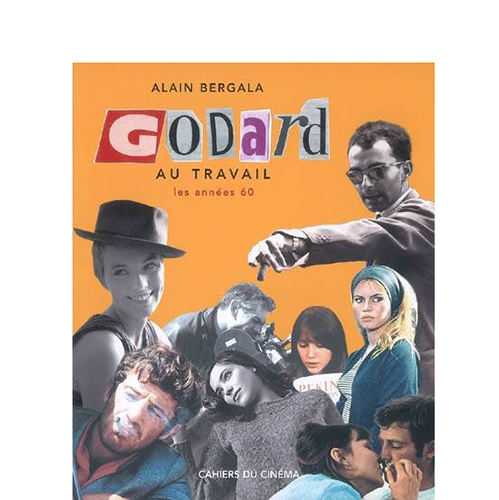
The influence of Jean-Luc Godard on cinema, but also on fashion, music and more globally on the narrative and aesthetics that proceeded from the 60s is more than important! The working method and trajectory of one of the most formidable artists that cinema has produced is revealed in this book – a book to put in the hands of every aesthete!
Author: Alain Bergala
Publishing House: Cahiers du Cinéma
Publication Date: 7 December 2006
Description : The career of Jean-Luc Godard, like that of other great artists of the twentieth century, has gone through several “periods”. It is his “first life in cinema”, that of the sixties, at the time of the triumphant New Wave, that Alain Bergala has chosen to explore. This book describes the blossoming of a power of creation and formal inventiveness out of the ordinary. Between 1959 and 1968, which marked a radical break in his work, Godard directed no less than 15 feature films, and immediately became one of the emblematic figures of this prodigious decade.
Many of them have conquered the cinephiles but also the general public and are among the masterpieces of the history of cinema: Breathless of course, with Jean-Paul Belmondo and Jean Seberg, Le Mépris with Brigitte Bardot and Michel Piccoli, Pierrot le fou with Jean-Paul Belmondo and Aima Karina, La Chinoise with Anne Wiazemskv and Jean-Pierre Léaud. Despite the great diversity of films from this period, where Godard explores the cinema in all directions, we can identify the permanence of a gesture of dazzling creation and an obvious unity of inspiration for the films whose Anna Karma, companion and muse of the filmmaker, was the “model”, from The Little Soldier to Made in USA.
These Godard films have become mythical, and the legend has often taken precedence over reality. Since his first film, Godard has forged an image of an innovative and unconventional creator, a provocateur and a genius, thus preserving a certain amount of mystery about the reality of his working method. This is why Bergala’s return to the source, which he has done here by delving into the film archives, challenges many preconceived ideas and sheds new light on the entire body of work.
Authors: Alexander Fury
Publishing House: La Martinière
Publication Date: 2021
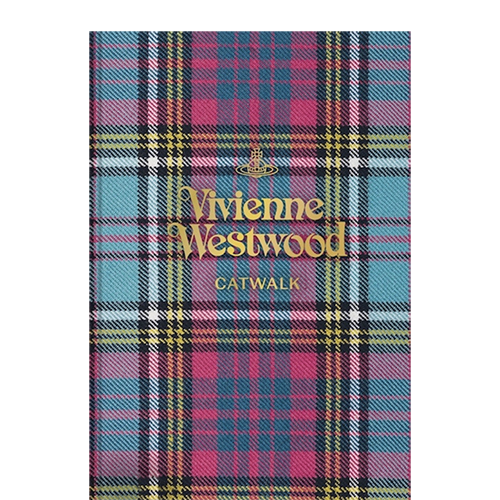
Description :Vivienne Westwood is one of the world’s most provocative and influential designers: “The only reason I am involved in fashion is to destroy the word ‘conformity’,” she once said. For 40 years, she has continued to disrupt, transform and challenge the fashion world. This book brings together her most singular creations since her first show in 1981, as well as those imagined with her husband and long-time collaborator, Andreas Kronthaler. The designer duo write their own biographies, while Alexander Fury presents each collection. With more than 1,100 photographs, this treasure trove of inspiration is an indispensable reference for all fashion professionals and Vivienne Westwood fans.

Icon Icon Opinion :
A slightly lesser-known figure than Yves Saint Laurent or John Galiano, Marc Bohan nevertheless contributed, from 1960 to 1988, to making Dior the highly revered house it is today. With his slightly more ethereal silhouettes, Marc Bohan left behind designs that are as sophisticated as they are timeless. And this book sheds new light on that period – a period documented and explained in the words of Jérôme Hanover, Christian Dior’s Director of Publications.
Authors: Jérôme Hanover, Laziz Hamani
Publishing House: Assouline
Publication Date: April 2018
Of all the great Parisian couture houses, Dior is perhaps the most famous and prestigious in the world, embodying Christian Dior’s sublime vision of femininity. Following the abrupt departure of Yves Saint Laurent, the understated elegance of Marc Bohan’s design outlook regrounded the house of Dior on its original foundation of soft, ladylike, feminine silhouettes, which appealed to women around the world, from American socialites and international celebrities to royalty.
Dior by Marc Bohan is the third volume in an unprecedented series of books devoted to each designer of a couture house, the ultimate compendium of the most memorable haute couture creations conceived and handcrafted by the renowned house of Dior since its inception. Carefully conserved in the world’s great museums and institutions, these fashion treasures have been photographed and exclusively compiled for this indispensable collection.

Author: Andre Leon Talley
Publisher: Fourth Estate Ltd
Publication Date: 2020
Description : During André Leon Talley’s first magazine job assisting Andy Warhol at Interview , a fateful meeting with Karl Lagerfeld began a decades-long friendship and propelled Talley into the upper echelons by virtue of his shared knowledge and adoration of fashion. He moved to Paris as bureau chief of John Fairchild’s Women’s Wear Daily , befriending fashion’s most important designers. But as Talley made friends, he also made enemies. A fraught encounter with a member of the house of Yves Saint Laurent sent him back to New York and into the offices of Vogue under Grace Mirabella. There, he developed an unlikely but intimate friendship with Anna Wintour, and as she rose to the top of Vogue‘s masthead, Talley became the most influential man in fashion.The Chiffon Trenches is a candid look at the who’s who of the last fifty years of fashion, and proof that fact is always fascinatingly more devilish than fiction. André Leon Talley’s engaging memoir tells the story of how he not only survived but thrived – despite racism, illicit rumors and all the other challenges of this notoriously cutthroat industry – to become one of the most legendary voices and faces in fashion.

Icon Icon Opinion :
It is the most prestigious appellation in the world – yet the iconic Romanée-Conti is the fruit of a vineyard that is small in size, but big in history. This is precisely what Laurens Delpech reveals in this book – the short story of the Prince of Romanée-Conti, the man who turned this modest vineyard into a grand cru, like a work of gustatory art!
Author: Laurens Delpech
Publishing House: Flammarion
Publication Date: October 2020
Description :Cousin of the King of France Louis XV, Prince Louis-François de Bourbon-Conti was a patron of the intellectuals of his time such as Diderot, Beaumarchais and Rousseau and a very famous collector of works of art. His stroke of genius was the purchase of the vineyard of the Romanée which was to be called Romanée-Conti. This book reveals the secrets of this mythical wine, object of a real cult by amateurs around the world. After a biography dedicated to the prince of Conti, it allows us, through recent tastings, to define the characteristics of this unique wine that must be placed within the Climates of Burgundy. These climates are terroirs where Burgundian grape varieties are optimally acclimatized. These long-recognized terroirs have enjoyed a unique historical continuity and were inscribed on the World Heritage of Humanity by UNESCO in 2015. To understand Burgundy, it is necessary to know its climates but also to be aware of the climate, that is to say the meteorological conditions of each vintage, because the fact of producing great wines, to the northern limit of maturity of the type of vines used, is sometimes like an obstacle course where nature tries to play tricks on the winemaker. This is why Laurens Delpech reproduces large extracts from the harvest reports published since 1996 by Aubert de Villaine, who runs the Domaine de la Romanée-Conti. This saga of successive vintages reminds us of the difficulty of winemaking. This original, very complete book, which highlights the duality of climates and climate that makes the greatest wines of Burgundy, is written with an alert pen. It is an excellent synthesis of the Romanée-Conti which will also be very useful to those who wish, quite simply, to refine their knowledge and appreciation of Burgundy wines.