
Verner Panton – Panthella
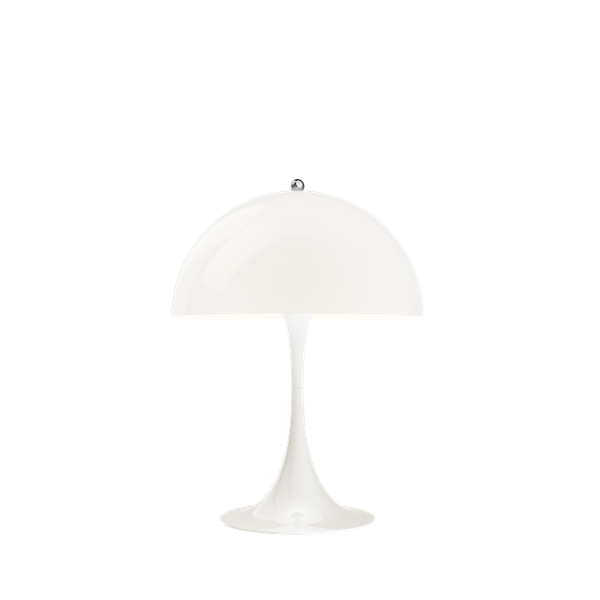
Verner Panton – Panthella
725.00 €
Icon-Icon Opinion :
“The main purpose of my work is to inspire people to use their imaginations. Most people spend their lives in a sinister gray-beige conformity, with a deadly fear of color. By experimenting with lighting, colors, textiles and furniture, and employing the latest technology, I try to show new ways to encourage people to use their imaginations and make their surroundings more interesting. »Verner Panton.
Name of the product : Panthella
Designer : Verner Panton
Description : The luminaire emits a soft, anti-glare and felted light. Its opal acrylic shade generates a diffused and comfortable light atmosphere thanks to its transparency, the downward reflection created by the inner shade, and the reflection created by the trumpet-shaped foot.
Related products
-

Wiggle Side Chair – Frank Ghery
955.00 € En savoir +BuyIcon-Icon Opinion :
Frank Gehry was one of the first designers to make furniture out of cardboard, coming up in 1972 with this legendary Wiggle Side Chair. It’s a tribute to the Zig-Zag chair by Rietveld that became iconic!
Name of the product : Wiggle side chair
Designer : Frank Gehry
Description : Architect and designer Frank Gehry is renowned for his use of unusual materials that undergo radical transformations. By creating the “Easy Edges” furniture series, he has given a new aethetic dimension to a material as mundane as cardboard.
Materials : Cardboard, Hard fibre panel
-

Hôtel du Cap-Eden-Roc
75.00 € En savoir +BuyIcon Icon Opinion
A beautiful book with delicious pastel-coloured pages, which explores each sumptuous room of this 150-year-old shelter overlooking the Mediterranean Sea. The Hôtel du Cap-Eden-Roc is a special place — a place that inspired Scott Fitzgerald, a luxurious, enchanting place that has housed great figures of this century… A place immortalised by photographer Slim Aarons as the absolute palace of the Dolce Vita! Dive into the history of this timeless place thanks to hitherto unseen anecdotes, documents and photographs…
Authors: Alexandra Campbell (Author), Graydon Carter (Preface)
Publishing House: Flammarion
Publication Date: April 2021
At the heart of Cap d’Antibes’ magnificent landscape lies a priceless treasure, the Hôtel du Cap-Eden-Roc. A true legend on the Côte d’Azur, this palace has been around for one hundred and fifty years, inspiring its visitors. High ranking aristocrats, painters, directors, actors, poets and photographers, many great names have stayed here and wanted to return regularly. Throughout its history, the hotel has welcomed personalities who have marked the history of art and cinema such as Francis Scott and Zelda Fitzgerald, Pablo Picasso, Marc Chagall, Marlene Dietrich and Rita Hayworth. This mythical hotel is both an exceptional place, a place for extraordinary meetings, and an ideal second home where the sweetness of life is cultivated to perfection.
-

Great Escapes USA. The Hotel Book
40.00 € En savoir +BuyAuthor: Angelika Taschen
Publishing House: Taschen
Publication Date: August, 2021
From the Napa Valley to the Hudson Valley, from the Wild West to the South, from the mountains of New Mexico to the coast of Maine: a journey across the USA will take you to legendary landscapes with all kinds of wonderful accommodations. Angelika Taschen presents her favorite destinations: beach houses and desert camps, motels and ranches, mobile homes and tents, resorts and inns.
-
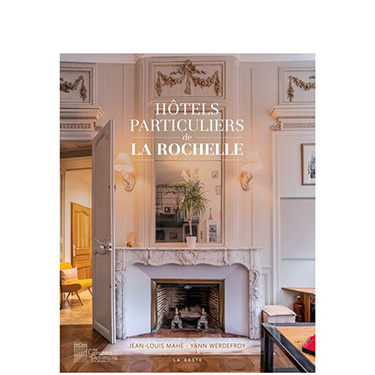
Hôtels particuliers de La Rochelle
39.90 € En savoir +BuyIcon Icon Opinion
A new dive into the large carriage doors of La Rochelle’s streets — in this book, a well-informed historian takes us on an instructive and ecstatic tour of these small palaces characterised by their taste and extravagance!
Authors: Jean-Louis Make, Yann Werdefroy
Publishing House: Geste
Publication Date: April 2021
After Trésors d’architecture de La Rochelle in 2019, Jean-Louis Mahé (for the texts) and Yann Werdefroy (for the photos) have joined forces once again to offer you an opportunity to discover the town houses of La Rochelle. Did you know that the historic centre has nearly a hundred of them, from the Renaissance to the dawn of the 20th century?
But what is behind these high walls and monumental portals? Often beautiful stones and magnificent timeless gardens where the mind enjoys travelling and rediscovering the ways of life of the past. Do you want to experience history? Then follow us, join us in opening these heavy doors to discover the treasures of the Rochelais heritage!